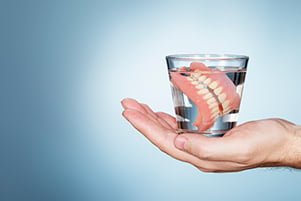
Many people assume dentures are a “set it and forget it” solution. They picture placing them in a soaking solution overnight and considering the job done. While soaking is an important part of denture care, it isn’t enough on its own. Brushing your dentures every day is essential for protecting your oral health, preventing odors and stains, and helping your dentures last as long as possible.
Think of your dentures as an investment. Just like natural teeth, they require consistent daily care to stay clean, comfortable, and functional.
Why Brushing Matters for Dentures
Although dentures aren’t natural teeth, they still collect plaque, bacteria, and food debris throughout the day. Without proper cleaning, these deposits can lead to a variety of oral health concerns.
Removes Plaque and Bacteria: Plaque and bacteria naturally build up on denture surfaces. If left untreated, they can cause bad breath and increase the risk of oral infections.
Prevents Stains and Discoloration: Coffee, tea, red wine, tobacco, and certain foods can stain dentures over time. Daily brushing helps remove surface stains and keeps your smile looking brighter.
Reduces the Risk of Gum Irritation: Bacteria that accumulate on dentures can irritate the gums and contribute to denture stomatitis, a common fungal infection that causes redness, soreness, and inflammation.
Supports Overall Oral Health: Healthy gums, tongue, and oral tissues are just as important when you wear dentures. Proper cleaning helps reduce harmful bacteria and supports a healthier mouth overall.
How to Properly Brush Your Dentures
Cleaning dentures is similar to brushing natural teeth, but it requires products and techniques designed specifically for denture materials.
Remove Your Dentures
Always remove your dentures before cleaning them. This allows you to reach every surface more effectively.
Rinse Away Loose Debris
Hold your dentures under cool or lukewarm running water to wash away food particles and loose debris.
Use a Denture Brush
Choose a soft-bristled denture brush instead of a regular toothbrush. Denture brushes are designed to clean thoroughly without scratching the material.
Apply a Denture Cleanser
Use a non-abrasive denture cleanser rather than regular toothpaste. Traditional toothpaste can be too abrasive and may create tiny scratches where bacteria can collect.
Brush Every Surface
Gently clean all sides of your dentures, paying special attention to grooves, clasps, and areas that rest against your gums.
Rinse Thoroughly
Rinse away any remaining cleanser before placing your dentures back in your mouth.
Soak Overnight
Most dentures should be soaked overnight in a denture-cleaning solution or water, following your dentist’s recommendations. Soaking helps loosen remaining debris, reduces bacteria, and helps prevent the dentures from drying out or losing their shape.
Don’t Forget to Care for Your Mouth
Even if you wear full dentures, your oral hygiene routine shouldn’t stop with cleaning your dentures.
Brush Your Gums, Tongue, and Roof of Your Mouth: Use a soft-bristled toothbrush or damp gauze to gently clean your gums, tongue, and palate each day. This removes bacteria, stimulates circulation, and promotes healthier oral tissues.
Rinse Your Mouth: An antimicrobial or alcohol-free mouth rinse may help reduce bacteria and leave your mouth feeling fresh.
Schedule Regular Dental Visits: Continue seeing your dentist for routine exams. They can evaluate the fit of your dentures, screen for oral health conditions, and make adjustments when necessary.
Protect Your Smile with Proper Denture Care
Dentures play an important role in restoring your smile, chewing ability, and confidence, but they require daily maintenance to perform their best. Brushing, soaking, and caring for your oral tissues help prevent stains, unpleasant odors, infections, and premature wear.
With a consistent cleaning routine and regular dental checkups, your dentures can remain comfortable, functional, and attractive for years to come. A few minutes of daily care goes a long way toward protecting both your dentures and your overall oral health.