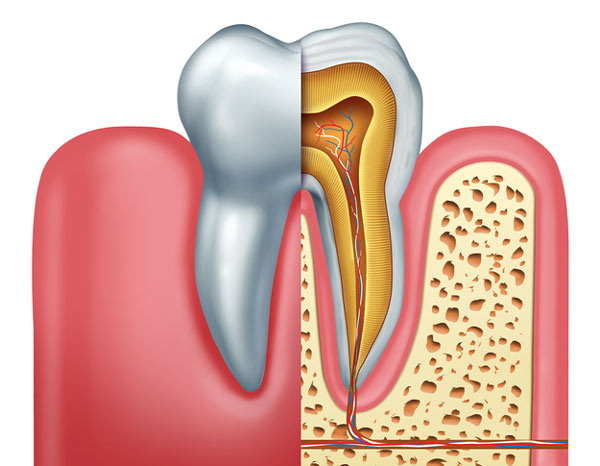
Inside each tooth is a soft tissue called the pulp, which contains nerves, blood vessels, and connective tissue. During tooth development, the pulp plays an essential role in helping the tooth grow and mature. Once a tooth is fully developed, however, it can continue to function without the pulp because it receives nourishment from the surrounding tissues.
When the pulp becomes infected or severely inflamed due to decay, injury, or other damage, root canal treatment may be necessary. During the procedure, the infected or damaged pulp is carefully removed, the inside of the tooth is cleaned and disinfected, and the root canals are filled and sealed to help prevent future infection. In most cases, the tooth is then restored with a filling or crown to strengthen and protect it.
The Culprits: Reasons for Root Canal Treatment
Several dental problems can lead to pulp damage and make a root canal necessary. Common causes include:
Deep Tooth Decay – Untreated cavities can spread through the enamel and dentin until bacteria reach the pulp, causing infection. Consistent brushing, flossing, and regular dental visits help reduce this risk.
Cracked or Chipped Teeth – Even small cracks or chips can allow bacteria to enter the inner portion of the tooth, especially when the damage extends below the gumline.
Repeated Dental Procedures – Multiple restorations on the same tooth may irritate the pulp over time, increasing the likelihood of inflammation.
Dental Trauma – A sports injury, fall, or blow to the mouth can damage the pulp, even when no visible crack is present. Symptoms may not appear until weeks, months, or even years later.
The Warning Signs: How to Know If You Might Need a Root Canal
Only a dental examination and appropriate imaging can determine whether a root canal is needed, but several symptoms may indicate that the pulp has been damaged or infected.
Persistent Tooth Pain – Pain that is constant or comes and goes, particularly when biting or chewing, may signal pulp inflammation or infection.
Lingering Sensitivity to Hot or Cold – Sensitivity that continues after the hot or cold source is removed can indicate damage inside the tooth.
Swollen or Tender Gums – Swelling, tenderness, or localized inflammation around a tooth may be associated with an underlying infection.
Tooth Discoloration – A tooth that becomes gray or dark may indicate that the pulp has been injured or is no longer healthy.
Pimple-Like Bump on the Gums – A small bump that drains fluid near the affected tooth can be a sign of a dental abscess requiring prompt evaluation.
The Good News: Saving Your Natural Tooth
One of the greatest benefits of root canal therapy is that it allows you to preserve your natural tooth. Keeping your natural tooth helps maintain proper chewing function, supports normal bite alignment, and reduces the likelihood of neighboring teeth shifting into the empty space. It also helps preserve the surrounding jawbone and often eliminates the need for more extensive restorative treatments that may be required after an extraction.
Modern root canal treatment is designed to relieve discomfort caused by infection while restoring the health and function of the affected tooth. With proper restoration and good oral hygiene, a tooth treated with a root canal can often last for many years.
Prevention Is Key: Taking Care of Your Teeth
Although root canal treatment is highly effective, preventing dental problems before they reach the pulp is always the preferred approach. Maintaining excellent oral hygiene, limiting sugary foods and beverages, and scheduling routine dental cleanings and examinations can help detect problems early before they become more serious.
If you experience ongoing tooth pain, swelling, prolonged sensitivity, or any other concerning symptoms, seeking prompt dental care can improve the chances of saving the tooth and preventing complications. Early diagnosis and treatment play an important role in maintaining long-term oral health.